
INERATEC and Zeopore accelerate next-generation hydrocracking for CO₂-neutral fuels and chemicals
- Collaboration combines INERATEC’s proprietary process technology with Zeopore’s high-performance zeolite catalysts to further increase the efficiency of CO2-neutral fuels and support the competitive scale-up of sustainable fuel and chemical production.
INERATEC and Zeopore are touting a successful technology collaboration driving a more efficient and economically competitive production of CO₂-neutral e-Fuels and e-Chemicals.
At the center of the collaboration is INERATEC’s newly developed hydrocracking process, designed to upgrade Fischer-Tropsch waxes from Power-to-Liquid production into high-value, drop-in-ready fuels and chemicals. Zeopore’s unique meso-zeolite catalyst technology further increases the performance of this process by enhancing catalytic selectivity, activity and lifetime.
Together, the two companies are committed to realize the rapid, low-risk scale-up of the production of sustainable fuels and chemicals.
Efficient pathway to climate-neutral fuel production. INERATEC’s groundbreaking, modular Power-to-Liquid plants cover the full value chain of sustainable fuel production — from green CO₂ and hydrogen to drop-in-ready fuels and chemicals. At the core of the process, the reverse water-gas shift reaction and lower-temperature Fischer-Tropsch synthesis are optimally coupled to convert renewable feedstocks into high-quality synthetic hydrocarbons.
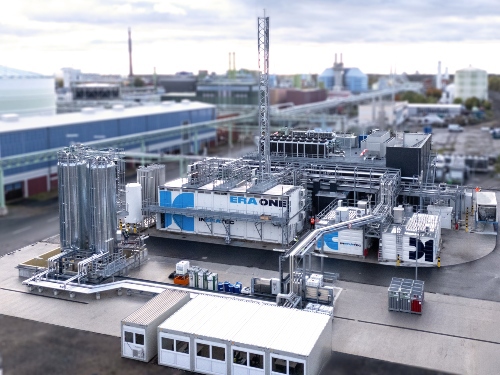
By integrating microstructure technology directly into stacked reactor foils with extremely fine channels, INERATEC enables exceptionally precise mass and heat exchange throughout the process. This innovative reactor design maximizes energy efficiency, dynamically adapts to fluctuating renewable power inputs, and provides a highly scalable solution for climate-neutral fuel and chemical production.
INERATEC’s proprietary hydrocracking technology. Heavy waxes being produced in the Fischer-Tropsch synthesis can be upgraded to high-value e-Fuels in a secondary hydrocracking stage. In this process, long-chain paraffins are cracked and isomerized into branched hydrocarbons with optimal fuel properties, including lower freezing points and improved engine performance.
To further increase process efficiency and strengthen the modular Power-to-Liquid concept, INERATEC has developed its own proprietary upgrading technology: a scalable, modular and cost-effective hydrocracking process specifically designed to convert Fischer-Tropsch waxes into drop-in-ready sustainable fuels and chemicals.
- Higher SAF Yield: The innovative low-pressure hydrocracking approach delivers a higher SAF yield by overcoming internal diffusion limitations through advanced catalyst design, enabling more efficient conversion of FT syncrude into sustainable aviation fuel.
- Lower OPEX: The simplified process configuration enables lower operating costs by reducing process complexity, minimizing energy-intensive operations, and eliminating the need for high-pressure systems, steam integration, and extensive downstream treatment.
- Lower CAPEX: The streamlined plant architecture enables lower capital investment requirements by avoiding complex high-pressure equipment and reducing the number of major process units, supporting a more compact and scalable SAF production solution.
This in-house technology extends INERATEC’s integrated value chain and reinforces the company’s position as a technology leader in Power-to-Liquid production — from CO₂ and hydrogen feedstocks to finished products that can be used in existing infrastructure.
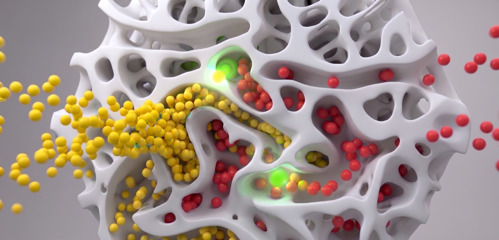
Zeopore catalysts as a key performance enabler. By integrating Zeopore’s catalyst technology into its hydrocracking process, INERATEC further elevates process efficiency. The improved structure of the catalyst, containing engineered 'mesopores' serving as internal molecular pathways, enables a strongly controlled conversion of Fischer-Tropsch waxes into high-value fuels and chemicals.
The illustration below depicts the core of Zeopore’s technology: the unhindered diffusion of feed molecules into the widened pore structure, followed by their selective cracking into the desired products — in this case, SAF — at the active sites.
Combining INERATEC’s proprietary hydrocracking technology and modular reactor design with Zeopore’s highly performant zeolite catalysts is an important performance booster — improving efficiency, product quality and the economic competitivity of synthetic fuel production.
This complementary collaboration is building on Zeopore’s extensive track record of optimizing zeolites for cracking, isomerization, aromatization and alcohol conversion processes. Zeopore is already actively leveraging this deep-seated expertise to optimize hydrocracking and dewaxing processes for traditional fuel production, but now also expanding towards sustainable CO2 conversion processes.
Performance benefits by combining Zeopore's catalyst with INERATEC's low-pressure hydrocracking. Extensive catalytic testing at INERATEC facilities have successfully demonstrated that Zeopore’s catalysts lift traditional diffusion and selectivity constraints in standard zeolites. As a result, the integrated process delivers measurable efficiency gains across the production chain:
- Higher carbon utilization: improved feedstock retention helps convert a greater share of captured CO₂ inputs into target fuel fractions instead of unwanted byproducts. Moreover, Zeopore's catalyst strongly reduced deactivation rates multiply the catalyst lifetime, and maintained near-complete conversion levels.
- Operational temperature: The Zeopore catalyst allows operating at significantly lower reaction temperatures, saving costly energy and lowering process severity.
- Reduced hydrogen consumption: Minimizing over-cracking reduces hydrogen consumption with double-digit percentages, directly addressing one of the most dominant cost factors in e-Fuels production.
- Lower byproduct formation: Enhanced catalytic selectivity suppresses the generation of undesired lighter gases, simplifying the downstream process, and improving overall efficiency.
- Industrial durability: Zeopore’s modified zeolites have shown stability and recyclability over extended operating periods, increasing long-term plant performance and economics.
Tim Böltken, CEO of INERATEC: "Zeopore’s catalyst technology complements INERATEC’s process innovation extremely well. Catalyst performance is a key building block in creating a highly efficient and competitive hydrocracking process, and we are excited to see how strongly Zeopore’s solution supports our own technology approach. Together, we are advancing a scalable path toward more efficient production of sustainable, drop-in-ready fuels and chemicals.”
Kurt Du Mong, CEO of Zeopore: "Our ambition is to reduce the price premium and increase the industrialization of sustainable fuel production. Seeing our meso-zeolites add such significant value to frontrunning technologies like INERATEC’s ERA ONE is incredibly rewarding. We are now ready to scale and welcome partners to join us in shaping the future of sustainable refining."
Through this close collaboration, both parties aim to make synthetic fuel production more efficient, scalable, and economically competitive. By accelerating industrial scale-up, they are creating a proven foundation for an affordable, climate-friendly energy supply.

Comments