

RCI, nova-Institut unveil new carbon label for products, intermediates and raw materials
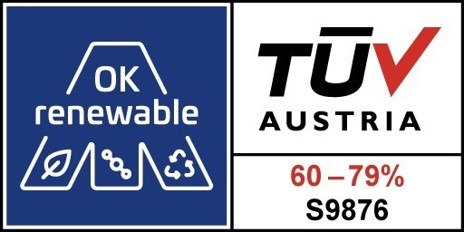
- This unique new label shows for the first time the share of fossil carbon in manufacturing and/or in products that has been replaced by biomass, CO₂ and recycling, and expresses it as a single, easy-to-understand product property.
The concept was developed by the Renewable Carbon Initiative (RCI) and the nova-Institut (Germany) and implemented by TÜV AUSTRIA Belgium. The entire process took three years until the certificate was launched on the market in April 2025. It is now available for products, intermediates and raw materials.
Why this certificate? The extraction of fossil fuels, such as oil, natural gas and coal, is the primary cause of man-made climate change, accounting for 80–90%. For the energy sector, transitioning from fossil fuels to renewable energies, especially solar and wind power, is the key to achieving climate neutrality (decarbonization).
However, the situation is more difficult in the chemical and materials sector, as carbon is an indispensable component in many chemicals, plastics, care products and detergents. Decarbonization is not possible in the chemical sector. There defossilization is key. Defossilization initiatives promote the use of renewable carbon from biomass, CO₂-capture, or recycling to reduce the impact on climate change. To achieve this transformation, new political and technical concepts are needed, which are currently being developed in Brussels and several member states. This is precisely where ‘OK renewable’ comes in. For companies that produce partly bio-based and partly bio-attributed products (Mass Balance and Attribution), ‘OK renewable’ is a very attractive option, or even the only option, because it is the only certificate that can combine bio-based and bio-attributed shares in one certificate.
"The new ‘OK renewable’ certificate accurately reflects our defossilization strategy, giving us the freedom to pursue bio-based and recycling approaches depending on the application, and allowing us to demonstrate this with a single label.“ –Jan Schoeneboom, BASF
What does the label show? The new certificate shows the proportion of fossil carbon that has been replaced by biomass, CO₂ or recycling in the process and/or product. A value of 80%, for example, means that 80% of the carbon already comes from renewable sources. It demonstrates the degree of defossilization achieved.
“The label represents a meaningful advancement in credible transparency by identifying product components no longer derived from fossil carbon. However, establishing recognition and perceived value of the label across the industry will demand sustained and strategic efforts to educate stakeholders and build understanding.” – Marjon Stamsnijder, Head of Sustainability, Henkel Consumer Brands
‘OK renewable’ is a meta-label that builds on existing certificates. Nine leading certifiers are currently acknowledged under ‘OK renewable’, meaning their certificates are accepted as valid evidence of renewable sourcing under this meta-label. This new certificate makes it easier and more efficient to verify renewable carbon sources (RCS) in products.
Benefits for businesses and customers. The ‘OK renewable’ label can simplify communication with customers. This means that two labels are no longer required for bio-based and recycled products. If CO₂ is also used in the production process, a total of three labels could be replaced by one label outlining the renewable share in the product, avoiding a double, or triple, verification process. Last but not least, companies build up customer trust by demonstrating their commitment to the transformation towards a climate-friendly industry.
“Because many of IFF 's innovative solutions are made from biobased renewable carbon, we see value for our customers to be able to demonstrate and certify this claim through TÜV AUSTRIA's single RCS certificate and label.” – Ana Maria Bravo, IFF

Comments