

Repsol surpasses 1,500 service stations in Spain and Portugal offering 100% renewable Nexa Diesel
- The multi-energy company consolidates its leadership in renewable fuels with 1,500 stations offering 100% renewable Nexa Diesel and meets the target set in the updated 2024-2027 strategic plan
- This consolidates Repsol’s position as the most important 100% renewable fuel networks in Europe.
- Repsol demonstrates that renewable liquid fuels are a real option to reduce CO₂ emissions from transportation.
- 100% renewable Nexa Diesel is Repsol's highest-end fuel. It has an exclusive formulation that optimizes performance and extends the lifespan of the engine.
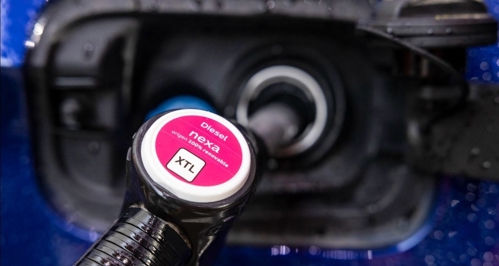
Repsol has reached a new milestone in its strategy to decarbonize transport by surpassing 1,500 service stations – 1,429 in Spain and 71 in Portugal – supplying Nexa Diesel of 100% renewable origin. This step forward reaffirms the company's commitment to renewable fuels and expands the range of technologies made available to support customers’ mobility, thus, meeting the objective outlined in the update of the company’s 2024-2027 strategic plan.
With this achievement, Repsol consolidates its position as the most relevant 100% renewable fuel networks in Europe, reaching more than 210 million liters sold so far this year. Currently, more than 40% of the company’s network of service stations offers renewable fuel, demonstrating that decarbonizing transport with renewable liquid fuels is a viable solution for combustion engine vehicles. These vehicles today represent 97% of the Spanish and European vehicle fleet, and 87% of sales in Spain so far this year.
To meet the climate targets set by Spain and the European Union, it is essential to recognize the role of 100% renewable fuels to reducing CO₂ emissions from combustion engines.
The 100% renewable Nexa Diesel, identified by its pink color, is Repsol's highest-end fuel. It has an exclusive formulation that optimizes performance, extends engine life, and is designed for all diesel engines. It is produced from raw materials of renewable origin and, with current technology, it already reduces the carbon footprint by up to 90% compared to the conventional fuel it replaces, thanks to the lower carbon intensity of the renewable fuel due to its organic origin.
Valero Marín, Executive Managing Director of Repsol’s Client Business, said: "Reaching 1,500 service stations that supply 100% renewable Nexa Diesel marks a key step forward in our strategy to decarbonize transport. This milestone reaffirms Repsol's commitment to reducing CO₂ emissions and expanding solutions for our customers' mobility. We continue working to offer all the energy alternatives that best suit their needs, thus, contributing to aligning mobility with the energy transition".
Renewable fuels. To decarbonize mobility, Repsol is committed to a model that combines all solutions that reduce emissions, such as renewable fuels, electrification, AutoGas, and renewable hydrogen, which the company is developing. The company’s vision is that all energy options, including conventional fuels combined with ultra-efficient engines, must be taken into account to guarantee supply, meet the needs of each customer, and reduce greenhouse gas emissions as quickly and cost-efficiently as possible.
Repsol already operates the first plant in the Iberian Peninsula to produce 100% renewable fuels on a large scale, in Cartagena, producing sustainable aviation fuel (SAF) and renewable diesel. In 2026, it will add a second plant at its Puertollano industrial complex, with the annual capacity to produce an additional 200,000 tons of 100% renewable fuel for road and maritime transport.
In addition to this, Repsol has also developed 100% renewable gasoline after more than two decades of research. Nexa 95 Gasoline, the company's highest quality 95-octane fuel, incorporates an exclusive formulation designed in the Repsol Technology Lab in Madrid and produced at the Tarragona complex to optimize the performance of the engine and keep it in optimal conditions. This fuel is already available at 30 service stations in the Spanish regions of Madrid, Catalonia, Valencia, the Basque Country, and Aragon.


Comments