

HAMR Energy receives additional funding for low-carbon liquid fuels projects
Leading Australian low-carbon liquid fuels (LCLF) company HAMR Energy announced the successful close of its AUD 10 million Series A funding round, securing investment from major aviation companies Airbus and Qantas, as well as leading global industrial firm thyssenkrupp Uhde.
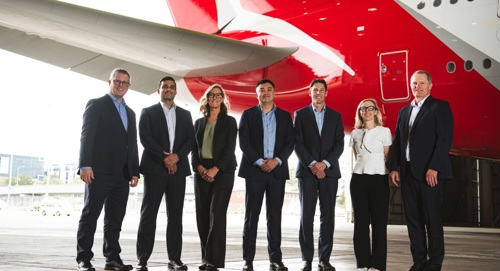
The investment marks a critical milestone as HAMR Energy advances its pipeline of LCLF projects which convert plantation forestry residues into fuel to decarbonize hard-to-abate transport including shipping and aviation. In further support of the project, Honeywell will provide its innovative UOP eFining™ process technology and expertise to enable renewable fuel production from methanol – a major breakthrough for the aviation industry.
HAMR Energy’s flagship project, Portland Renewable Fuels (PRF), in regional Victoria will use residues from the local plantation forestry industry to produce 300,000 tonnes per annum of low carbon methanol. This methanol can be used directly as a shipping fuel or converted into sustainable aviation fuel (SAF), helping close the global SAF supply gap, strengthening Australian fuel security and supporting the country’s transition to cleaner energy.
With global SAF demand estimated to reach 500 million tonnes by 2050 (*Source: IATA), HAMR Energy’s projects could play a pivotal role in production in Australia. The sector will deliver AUD 13.1 billion in Gross Value Add and create or sustain 70,000 jobs, according to a study by ICF (*Source: ICF report) commissioned by Qantas and Airbus.
In addition to PRF, HAMR Energy is developing Australia’s first major methanol-to-jet fuel facility which will have the capacity to convert methanol into more than 135 million litres of SAF annually. It will create hundreds of jobs in construction and up to 130 long-term operational roles once established, enhancing Australia’s resilience and self-sufficiency in aviation fuel supply.
HAMR Energy’s experienced executive team has deep expertise in global fuel markets and complex energy projects. They have designed an innovative, vertically integrated production model to meet the needs of customers by using existing byproducts with Memorandums of Understanding for long-term supply agreements with partners including sustainable plantation forestry company OneFortyOne. This method offers lower lifecycle emissions than alternative feedstocks and utilises proven technology to produce highly competitive fuels.
The investment from Qantas and Airbus will be taken from their joint Australian Sustainable Aviation Fuel investment fund and existing investors have recommitted.


Comments