


Seven markets to track if peace breaks out in the Middle East
A durable peace breakthrough in the Middle East would ripple through markets far beyond crude oil, quickly stripping out risk premia that have been baked into everything from freight rates to fertilizer prices.
The key for investors and traders is not just whether prices fall, but how different parts of the energy complex move relative to one another.
Here are key charts - across crude, products, shipping, gas, industrial commodities and equities - to gauge whether markets are pricing a temporary easing of tensions or a structural shift in global supply and demand if a peace deal emerges.
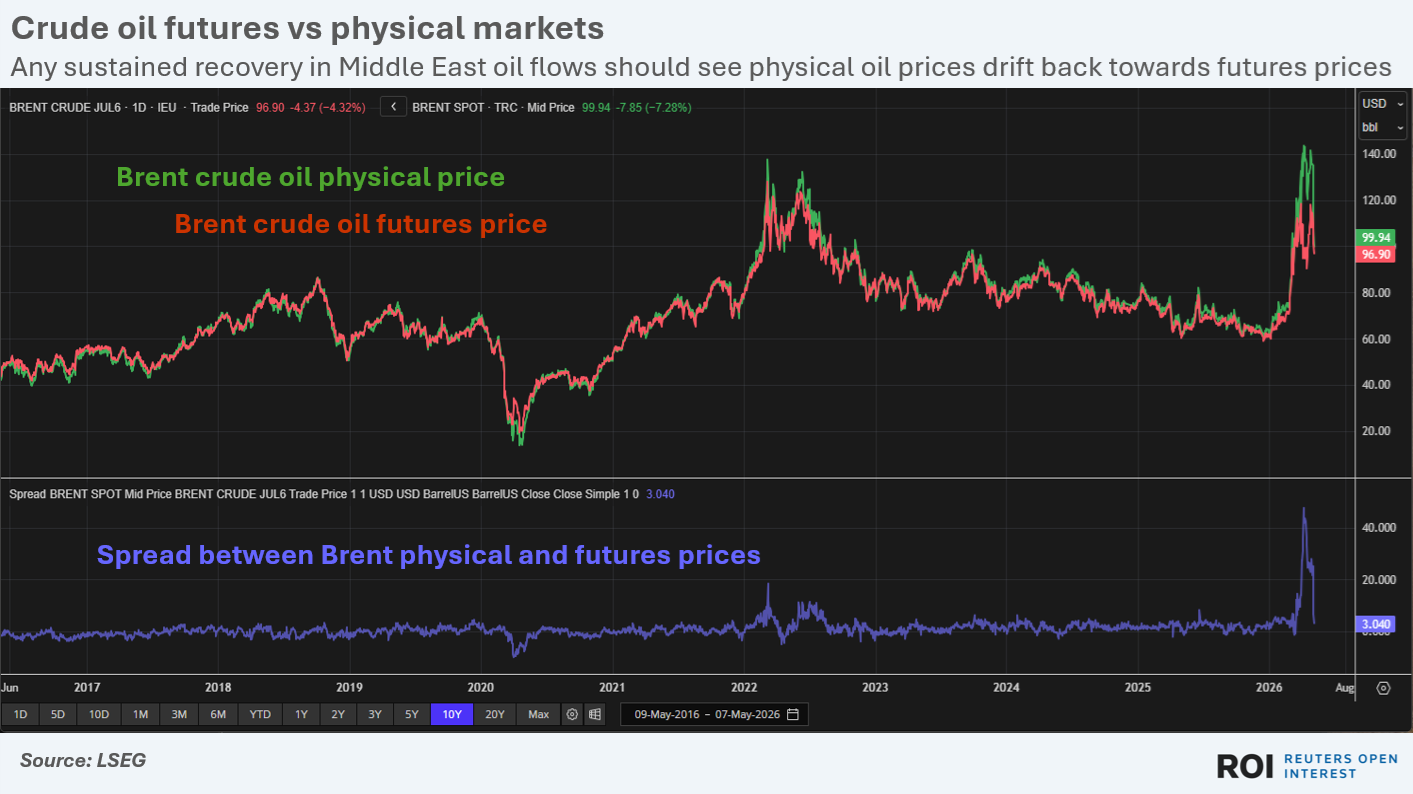
PHYSICAL VS. FUTURES. Since the U.S. and Israel attacked Iran at the end of February, a historic dislocation has emerged between key physical and paper crude oil markets.
(click image to enlarge)
The physical or spot market for Brent crude - the global oil benchmark - has tightened dramatically as cuts to shipping flows from the Middle East caused global oil supplies to drop and shipping and insurance rates to surge.
Brent spot prices BRT- surged above $140 a barrel in April - near all-time highs - as traders scrambled to accurately price in the impact of the conflict that brought shipping flows from the Middle East to a near standstill.
Brent crude oil futures LCOc1 also surged from the end of February, but topped out below $120 a barrel as paper traders looked beyond the scary headlines and assumed that the parties involved would patch things up before long.
If refiners and physical oil traders believe a lasting peace deal is reached, physical oil prices should retreat notably from current levels to indicate that a sustainable recovery in oil supplies is expected.
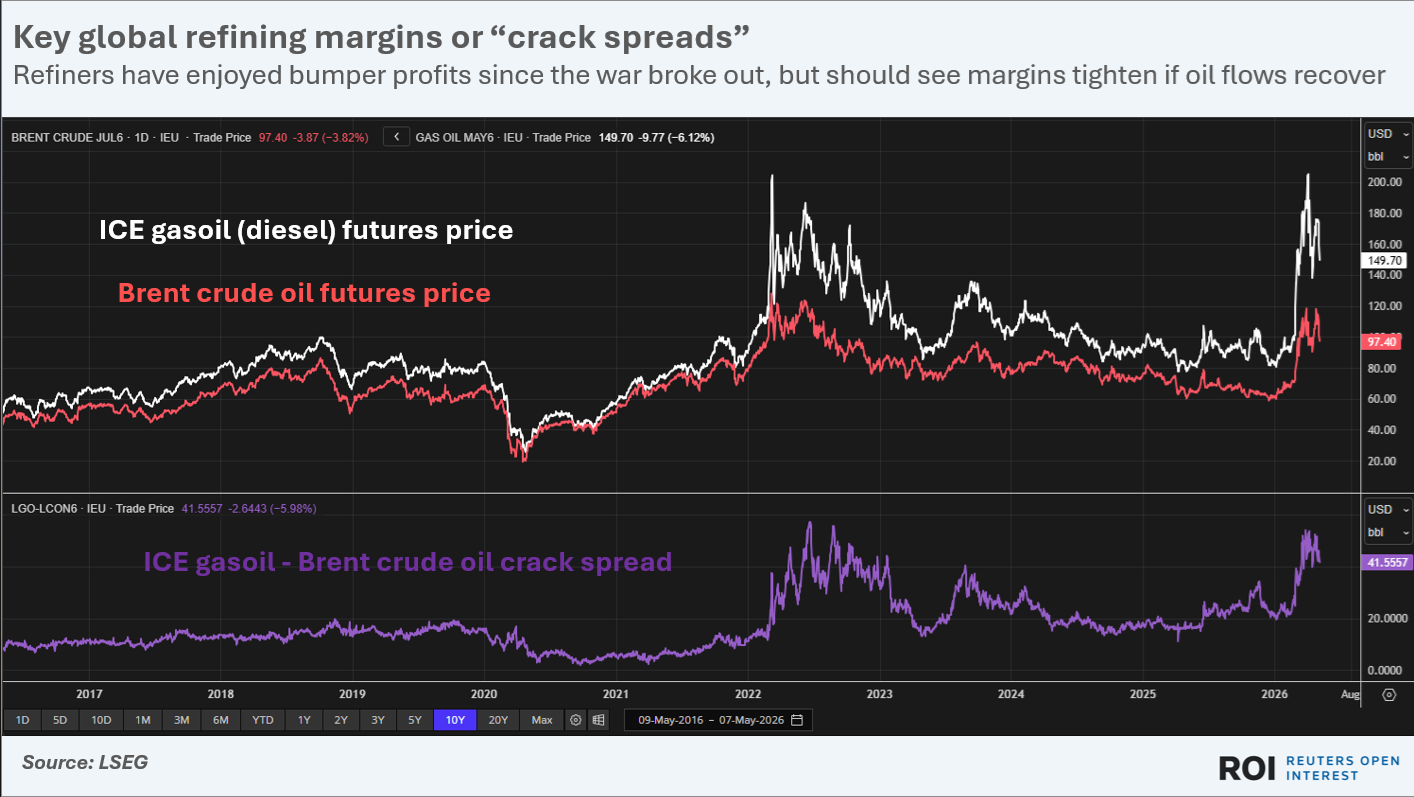
REFINING MARGINS. Oil refiners have enjoyed bumper profits since the war began, thanks to the rapid rise in fuel prices driven by consumer concerns about potential shortages.
(click image to enlarge)
The so-called crack spread between gas oil or diesel prices and Brent crude futures LGOc1-LCOc1 is a widely tracked gauge of refiner profits and has more than doubled since February to around $45 a barrel due to the conflict.
Any lasting recovery to oil supplies should sharply compress that margin, which would be a key metric on whether oil market participants genuinely believe global oil flows will return to previous levels.
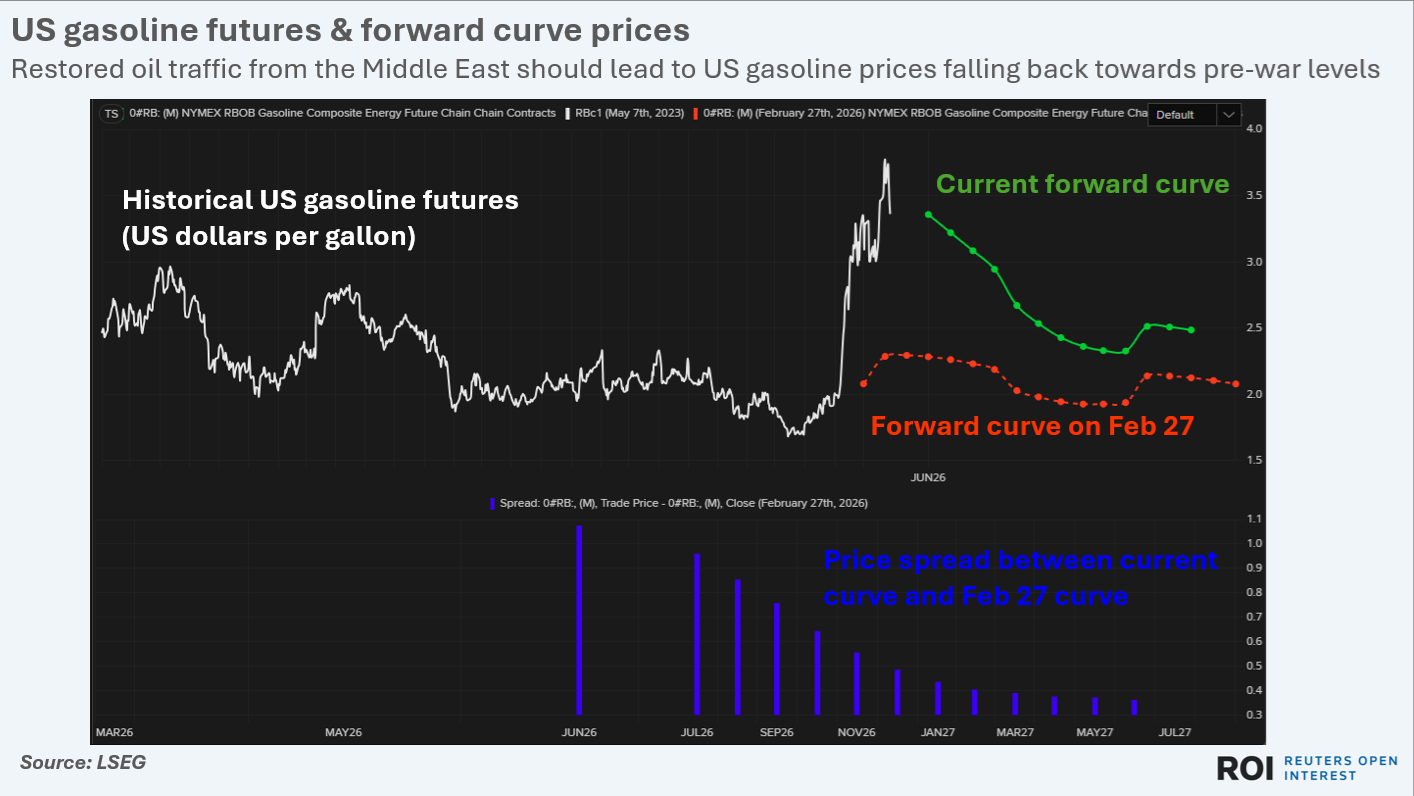
U.S. GASOLINE. The steep climb in U.S. gasoline prices to multi-year highs this month has served as a painful reminder to U.S. lawmakers that the impact of the Iran war extends even to other major oil-exporting regions.
(click image to enlarge)
But any authentic peace deal should quickly translate into a decline in U.S. fuel prices given the scale of U.S. crude output.
A key metric to follow will be the forward curve of the U.S. gasoline market, which tracks future expected prices of the fuel through the coming year or so.
Any widely believed breakthrough with Iran should see forward prices drift back towards pre-war levels, while any scepticism about the peace deal would likely prop up forward prices for the foreseeable future.
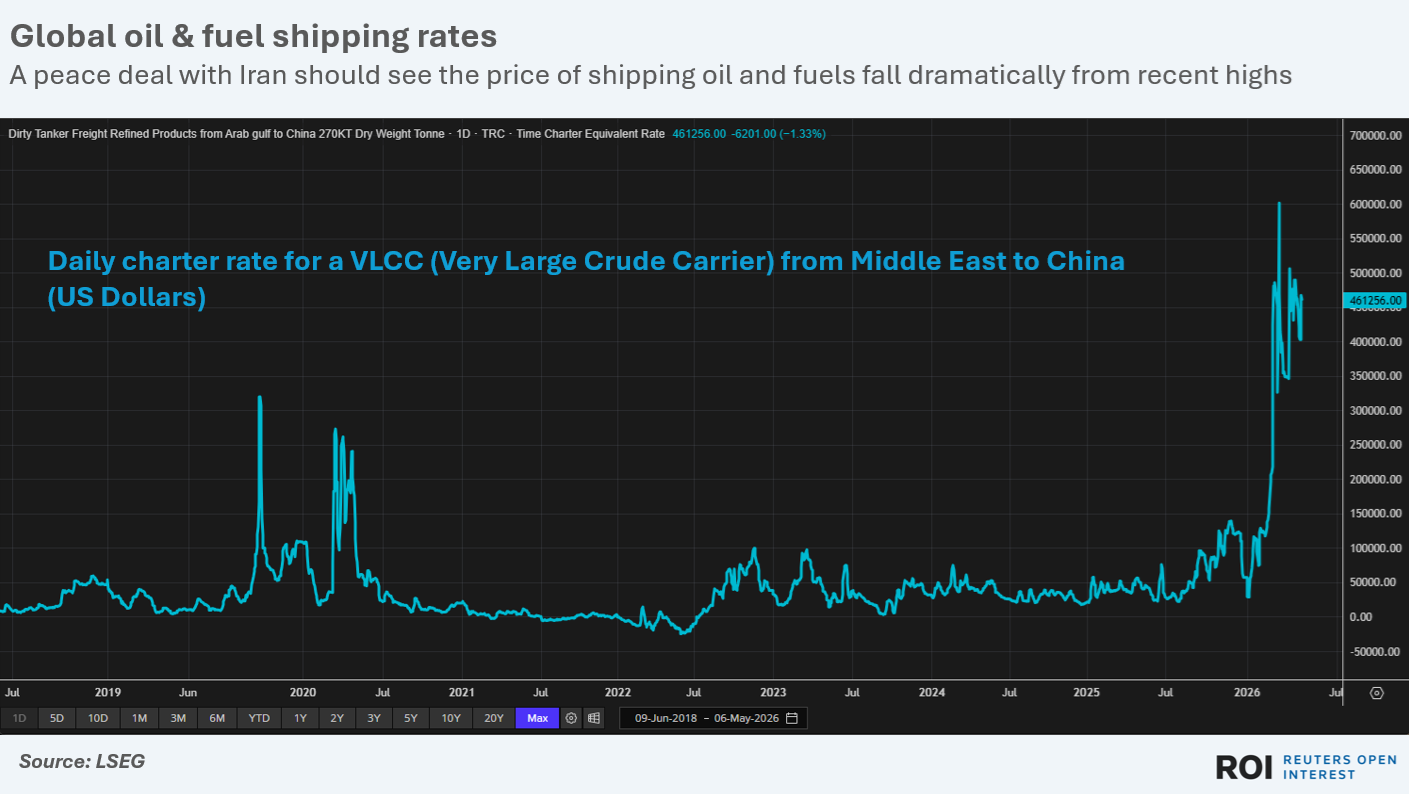
FREIGHT FIX. The cost of chartering oil tankers from the Middle East has been one of the most eye-catching repercussions of the Iran war, with daily rates for a VLCC (very large crude carrier) from the Middle East to China soaring from below $150,000 before the war to more than $450,000.
(click image to enlarge)
A sudden breakout of peace and a resumption of tanker traffic flows from the Middle East should work to depress those transit costs, although full restoration of insurance markets would be needed for rates to return to former levels.
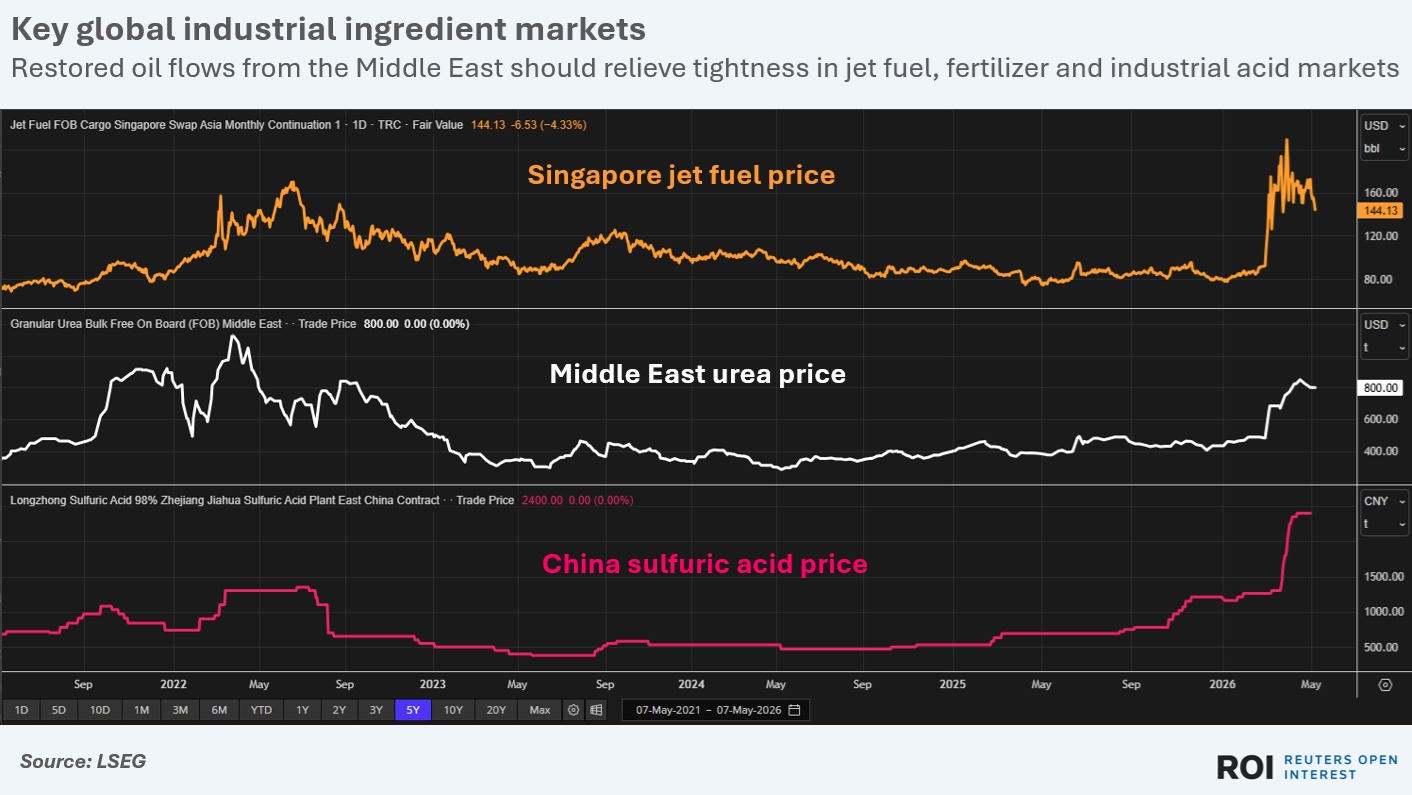
BEYOND OIL. Crude oil and fuels were not the only markets snarled by the Iran conflict, as the Middle East is a major supplier of several other commodities including fertilizers and industrial acids.
(click image to enlarge)
If a peace deal is reached that speedily restores traffic from the region, prices of jet fuel, urea and sulfuric acid on international markets should come steadily lower.
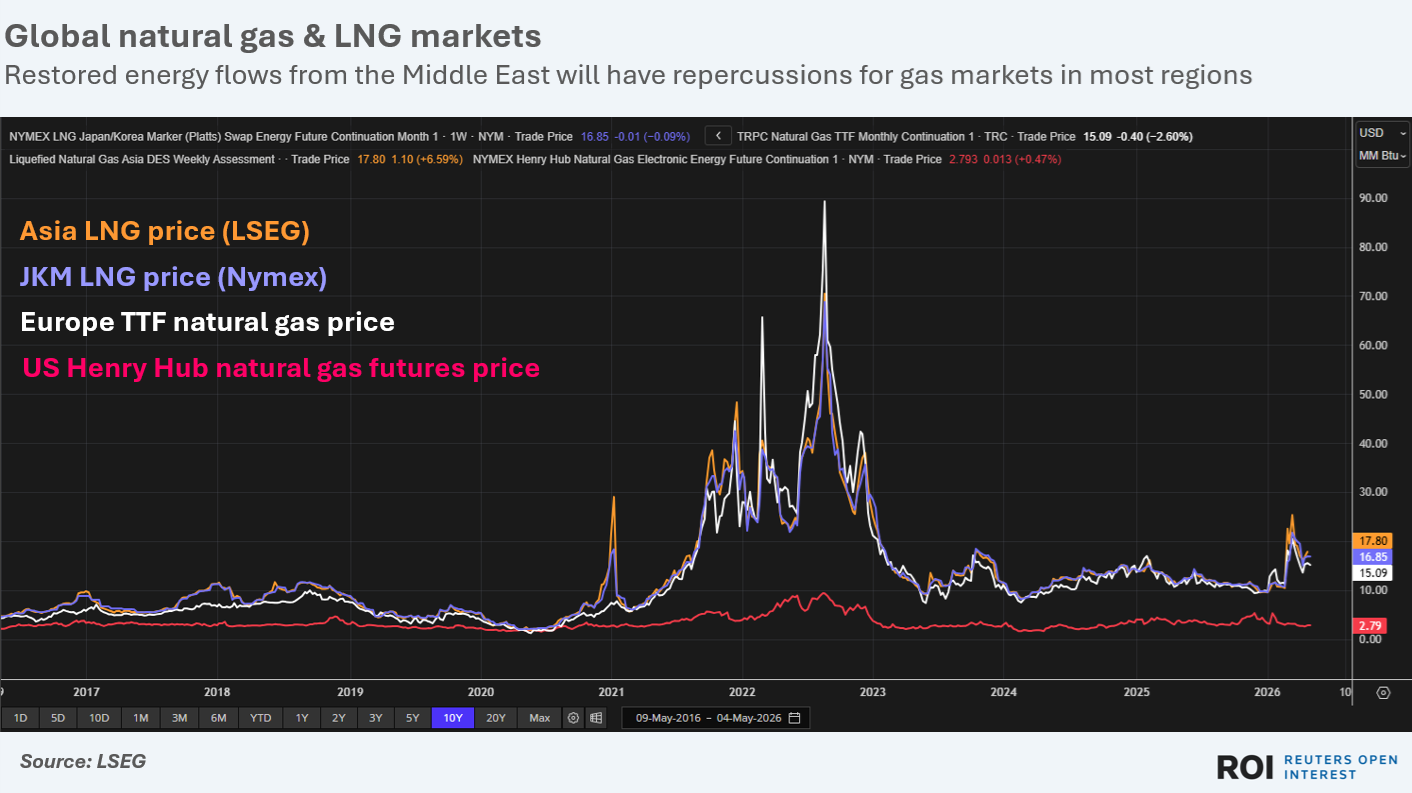
GAS & LNG. Global natural gas markets have also been roiled by the fallout from the Middle East conflict, and stand to come in for a correction if a lasting peace deal is reached.
Prices for natural gas and LNG (liquefied natural gas) have surged in Asia and Europe since the war got underway and stand to be the markets where the largest potential retreats would emerge once the conflict officially ends.
(click image to enlarge)
That said, restocking of depleted gas stockpiles combined with higher gas burning during the summer for power generation may limit the price falls in certain areas, especially during hot spells that drive power-hungry air conditioner use.
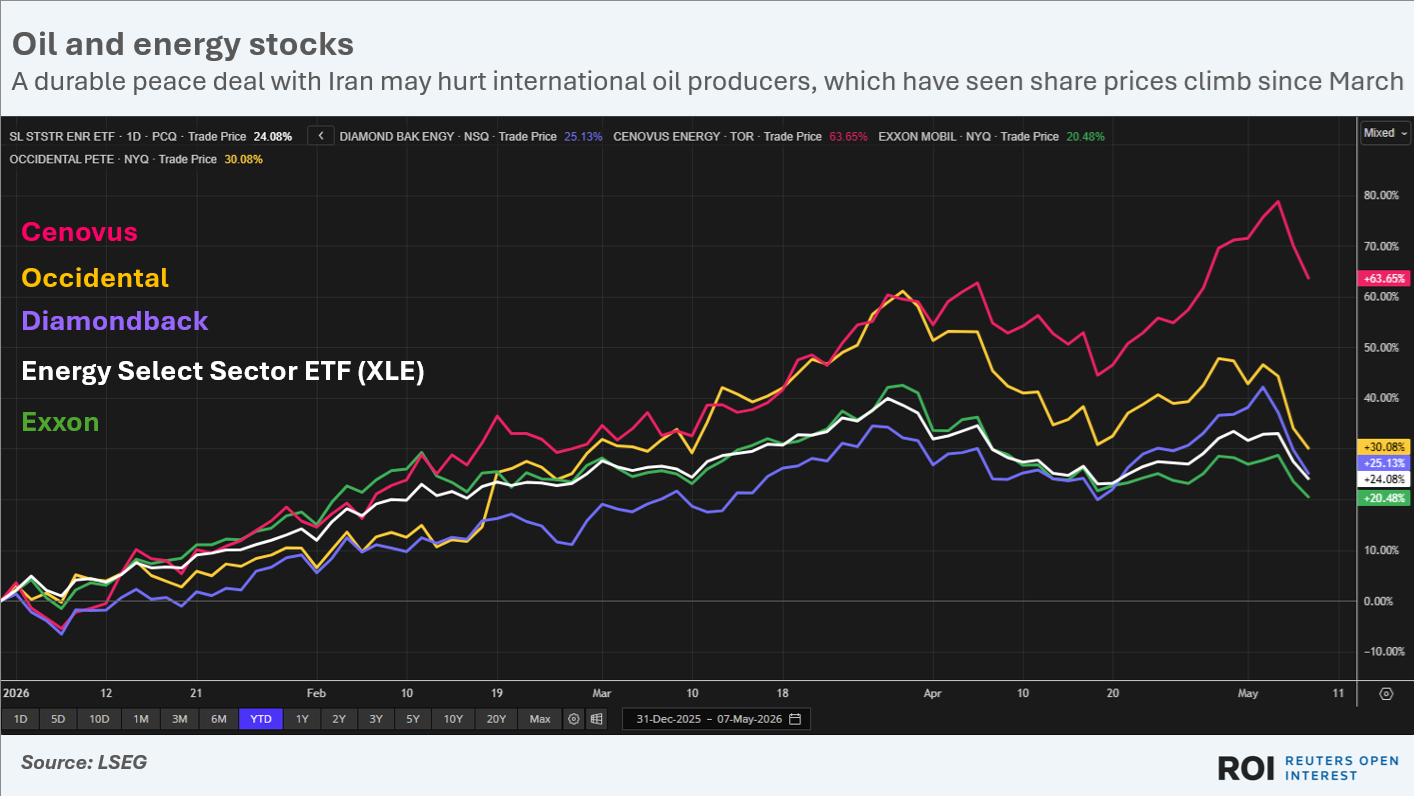
STOCK PICKING. For investors looking to track how companies rather than markets are impacted by any conflict resolution, the share prices of oil-heavy energy producers are likely to come in for some turbulence if and when a peace deal is reached.
(click image to enlarge)
In North America, the shares of Canadian oil sands producers and U.S. shale oil extractors have scaled multi-year or record highs in the wake of the fighting in the Middle East.
As a result, any end to hostilities and a recovery in Middle Eastern oil output and exports should trigger selloffs in those stocks, which could result in a broader pullback across the international oil and gas space.
All told, a genuine peace dividend would not just push oil lower, it would reshape spreads, flows and relative pricing across the entire energy complex.
Investors who watch those relationships, rather than any single price, will be best placed to judge whether calm in the Middle East marks the start of a more stable - and structurally cheaper - energy era.
The opinions expressed here are those of Gavin Maguire, a columnist for Reuters.



Comments