

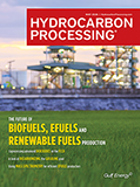
Economics
Improving resource efficiency of industrial processes with TOP-REF methodology—Part 1
The processing industry consumes significant amounts of resources, such as materials and energy, to produce valuable goods for society.
Industry Perspectives: IMO 2020—What is your say?
In 2020, new International Maritime Organization (IMO) marine fuel regulations will go into effect.
Digital: Seize the benefits of digitalization
Digitalization has been making waves in the energy space, with upstream companies leading the trend with technology that improves efficiency, cuts costs and boosts margins.
Viewpoint: The opportunity for greater growth and value—Considerations for crude-to-chemicals projects
Industry players are focused on upgrading to higher-growth, higher-value chemical products.
Africa: Troubled Nigerian refineries hamper petrochemicals growth
Nigeria’s petroleum industry has had its fair share of upheavals, ranging from insecurity that hampers upstream operations to low global oil prices that constrain midstream and downstream investments.
Editorial Comment: HPI spending in 2019 forecast at $375 B
Regulations, feedstock advantages, supply/demand gaps, etc., are resulting in a surge of new capital investments around the world.
Industry 4.0 in the oil and gas business
The operational cost structure of oil and gas companies is very capital- and labor-intensive.
Capital projects are making a comeback, but are EPC firms ready?
After several years of cutting costs to align to the reality of fewer and smaller capital projects, engineering, procurement and construction (EPC) firms are now forging ahead as the industry recovers.
Eight strategies to minimize capital expenditures for a better bottom line
The following are eight strategies to help reduce engineering, procurement and construction (EPC) project costs, along with tips to maximize the value of both existing assets and new investments for refiners and producers.
Conceptualizing a mega-integrated refinery and petrochemical complex: A case study
<i>Integration</i> is the new keyword for sustainability and profit in today’s oil and gas market scenario.

- Sherwin-Williams unveils new advanced energy barrier that eliminates threat of corrosion under insulation 6/26
- SIBUR develops new polyethylene grade for beverage packaging 6/26
- IGS launches Rovex, a next-generation robotic cleaning technology for fired heater efficiency 6/26
- A comprehensive technical evaluation of polypropylene technology platforms 6/26
- Sasol and Topsoe to refocus SAF partnership as Zaffra JV prepares for wind-down 6/26
- Indonesia sets 3-month transition period for B50 biodiesel program 6/26